

These days I mostly blog giving sales and networking tips to freelancers, small business owners, and other sales-haters… But in my ‘day job’ I’m a freelance SEO consultant, and have been for over 7 years (since May 2013).
Despite having worked in SEO (mostly agency-side) for about 4½ years before taking the leap into full-time self-employment, I never had to do the sales part back then. Not properly, anyway. I did a bit of networking on behalf of one of the agencies I worked at, but dedicated salespeople did the actual sales bit. So, when I went self-employed, and realised that I had to do all the sales all on my own, it was pretty intimidating.
Over the years though, I’ve managed to network, self-promote and sell myself in a way that hasn’t really been that salesy at all (I call it ‘Anti-Selling’). And it’s been a great way to generate inbound leads on an ongoing basis.
15 Ways to Get SEO Clients
So here’s a list of different ways you can get yourself out there – and get SEO leads in the process – without having to overly sell yourself, or cold call, or anything yucky like that.
Important disclaimer: As I publish this, the UK (and most of the world, to be fair) is still in lockdown due to the coronavirus. Therefore some of these networking tips may need adaptions in order to be more COVID-friendly. There’s an “Adjustments for COVID-19” section right near the bottom of this post that gives further tips on how to network in a safe, socially-distanced, and lockdown-friendly way.
1. Err… Do SEO
Right – let’s get the obvious one out of the way, shall we?
We’re SEOs. We can SEO ourselves – whether that be for service-type keywords (e.g. “seo expert cardiff”) or perhaps a particular blog topic (e.g. I used to get enquiries from an old blog post all about removing defamatory Google reviews).
It seems stupid to mention it (as it’s so obvious), but it probably would’ve been stupider not to mention it. I guess. Sorta.
Aaanyway…
2. Business networking events
Back in the day, before I even went full-time freelance, I cut my networking teeth (so to speak) at BNI events. They can be pretty intimidating, as meeting people and passing referrals is the main point of them, and BNI doesn’t have the best of reputations (I’m gonna blog my thoughts on that separately one day), but generally – and in my experience – you end up meeting a good bunch of people who want to help each other out.
The good thing about certain business networking events (such as BNI) is that they have a ‘one person per profession’ rule, so if you’re put off by networking alongside competitors, you should find the setting more comfortable.
I recommend checking out a few different BNI ‘chapters’ (as they’re called) before committing to one (if you commit) – and not just jumping into the very first one that you find. The last time I checked, you could visit a chapter (or ‘sub’ for someone) twice in a six-month period – so I guess you could be cheeky and visit a chapter once every three months (so long as another SEO or marketer hasn’t already filled up the slot, of course). It’s not really in the spirit of BNI (and it’s better to meet up with the same people week-after-week, in order to get to know them properly – and vice versa) but that could be one way to do it.
Despite my focus on it, BNI isn’t the be-all-and-end-all of business networking events though. There are a bunch of other alternatives: some national/global initiatives, as well as independently run ones. It might be worth asking around or researching what’s in your area and checking out the ones that seem best for you.
To be honest though… If you’re reading this hoping to find less salesy environments (which is fair, because I did put that in the blog post’s title!), then events such as BNI may not be the best fit for you. You don’t have to go to business networking events to do all your business networking though – there’s plenty of other places you can do it (and where you might prefer to do it). Such as…
3. Go to SEO meetups
A good alternative to business networking events is meetups. And if you’re an SEO, going to an SEO meetup is probably a no-brainer. In addition to learning more about SEO and further developing your dark magic powers skills, you can also meet like-minded SEOs.
Yes, some of them may be your competitors (in the form of fellow SEO agencies and freelancers), but in my experience, you’ll also find that small business owners attend the meetups to pick up a tip or two, as do in-house SEO employees at larger companies. And people who don’t necessarily do SEO but who work in closely related fields, such as web developers, social media marketers, etc. – i.e. people who’d make good referral partners.
Speaking of which…
4. Go to non-SEO meetups
Yep, you read that right: non-SEO meetups. Going to SEO meetups is one thing, but if you go to other types of industry meetups – especially those closely aligned with SEO – then it can be a great way to meet a bunch of potential referral partners.
I used to make the effort to go to a variety of meetups: blogger meetups (Cardiff Blogs), web development meetups (unified.diff), entrepreneurship meetups (Cardiff Start), designer meetups (Design Stuff Cardiff)… you get the idea.
Room filling up nicely @cdfblogs All here to hear the lovely @gemma_ds @ardiecoll @hintofsarcasm @elenacresci pic.twitter.com/pjeFg8ss
— Cardiff Blogs (@cdfblogs) February 22, 2012
By doing so, you might find that you’re the only SEO actually attending such events. And therefore you may become the only SEO that some of those web developers, bloggers, etc. get to know and trust.
I discovered this ‘tactic’ by accident, back when I first started attending Cardiff Blogs events. The important point to make here is that I went along to learn more about blogging and to brush up on my skills – not to sell. But people asked me who I was and what I did, and when they found out I did SEO, naturally they’d ask for tips and advice. I didn’t go to the events to sell myself, but I inadvertently sold myself and my skills in the process – sort of an added bonus. However, if you do the same but without any interest for the subject matter, the speakers, etc., then it could all backfire. So it’s important that you go because you actually want to go and learn and meet people – not just because you want to hand out a business card or two. People will see right through it.
5. Speak at events & meetups
Naturally, if you’re able to speak at events, then that can be a good way to get known for what you do, too.
The same tip from #4 applies: if you speak at an SEO event then great, but if you can do an SEO talk at a web developer meetup or a more general marketing meetup, then that can be gold-dust when it comes to inbound leads. I spoke at a web developer meetup once (c. 50 attendees) and within 24-48 hours I’d had about six enquiries! It truly, truly works.
6. Run your own meetup
Wanna take the whole meetup thing up a notch? Don’t just go to meetups – run a meetup.
If you go to a meetup, you might get to meet and speak to a handful of people each time you go. If you speak at a meetup, then you’ll be known by everyone at that event at that time. But if you run a meetup, you’re essentially centre-stage both at the events and outside of the events (e.g. if there’s a community in play, such as on Meetup.com).

I run Cardiff SEO Meet, which (pre-lockdown) happened every 2-3 months. In fact, I recently blogged about the time I met a great household-name client as a result of running the events, who I probably wouldn’t have met otherwise. It made for a really easy ‘sell’, too.
The only downside is that it can be a lot of work. In my case, it works well because I love running events (fun fact: I wanted to get into events management before I got into SEO). But it doesn’t have to be an event that you run, y’know…
7. Run something else – e.g. a webinar or podcast
If you don’t like the idea of running an event, then don’t run an event. But if you’ve always liked the idea of running your own webinar or your own podcast, then do that instead. Play to your passions and your strengths; do the thing that you think you’ll enjoy the most – you’ll be more committed to it for a start, and probably do a better job of it as well.
And while everyone jokes about there being too many podcasts out there already(!), do some research and see what you can add that isn’t already out there. There may be a fair few general SEO podcasts already, as well as technical SEO-dedicated ones and link building-dedicated ones, but what about SEO for particular industies, such as – say – the industry that your agency/freelance business targets the most…? *wink wink*
A cheeky thing you can do here (and this also applies to the previous point about running events) is to invite guests who are potential referral partners or are even prospective clients. Let’s use a hypothetical example: your dream client is Super Magic Widgets – what’s stopping you from inviting the Head of SEO at SMW to your event/webinar/podcast/whatever as a speaker or guest? It might not amount to anything, but then again, they now know who you are (whereas they might not have done previously). And what if they remember you the next time they need to outsource some SEO work or need the help of an outside agency/freelancer? Even if it doesn’t amount to anything, s/he may have friends who are also Heads of SEO at other awesome companies – and if they listen to their friend’s interview/appearance, now they know who you are, too. Again, similar to what I said earlier in the ‘go to non-SEO meetups’ section above, I’d be careful doing this too much – people might see through it for what it is if you do. But it’s something to consider.
8. Help out in Facebook groups
I love this one – it’s served me so well.
There’s a sea of Facebook groups out there, dedicated to anything and everything you can think of. Over the years I’ve become the ‘go-to’ SEO person in a local entrepreneurship group (Cardiff Start) as well as in the private members’ group of my coworking space (Welsh ICE).
Join them, keep an eye on them, and simply help out when and where needed. If someone has an SEO query then jump in and help them. You can even also help out with more general/non-SEO stuff: e.g. if they ask things like how to get clients, how to manage your business – stuff like that.
The key is not to sell. Don’t jump in being like: “buy my stuff!!!” – it’s a good way to get banned immediately, and then you’ve lost out on the opportunity entirely. Just offer help.
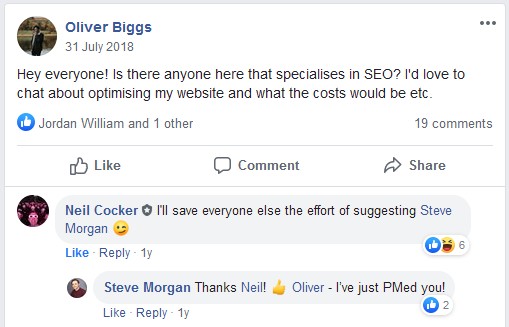 For me, with the local entrepreneurship one, they have a super strict ‘no self-promotion’ policy, so I’ve never ‘sold’ myself in there – I’ve just contributed and helped out. But then, when someone leaves a post asking for a recommendation of an SEO professional, people tag and name-drop me in the post. The best bit about this? I don’t even have to do it myself! Which is great, because after all, someone saying “hire this person” is much better than me saying “hey I can help with that, hire me” – as the former shows that someone else (not you yourself) has put you forward and advocates for you.
9. Participate in Twitter chats
By ‘Twitter chats’ I’m specifically talking about those hour-long, (usually) weekly, Q&A-style discussions that revolve around a particular subject. There’s a fair few SEO ones you might’ve come across before: #SEOChat and #SEMrushchat, to name a few. SEMrush (who run the latter) have a good guide about contributing to Twitter chats, so I won’t go into too much detail about that here.
Again, the rules from previous sections all apply. Don’t sell (or overly-sell) – although that said, they do usually have an ‘introduce yourself’ type moment at the beginning, so that’s an opportunity to say who you are and what you do. Also, like before, contributing to SEO-related ones is great, but if you can contribute to others in semi-related industries, then that can work well.
Recommend going self-hosted ASAP in that case – best move I ever made. You can then use plugins such as Yoast SEO. #BlogHour
— Steve Morgan (@steviephil) June 14, 2016
For example, I used to contribute to #BlogHour, which is run by the UK Blog Awards (although I don’t think the Twitter chat is running anymore, sadly) – and just by answering the questions and discussing points with people, it’s led to an enquiry or two over the years. And while one of them in particular was a hobby blogger, her employer was a big London-based company – so you never know what’ll come out of it. Better yet: when the #BlogHour topic one week was all about SEO for bloggers, I was able to really shine – I had a lot of fun that week. And because I’d been a past/regular contributor, I didn’t look like I was only jumping in to try and show off my SEO knowledge and that’s it – it looked a lot more authentic (because it genuinely was)!
10. Join a coworking space
Quick disclaimer: I love coworking.
I’ve been a member of the amazing Welsh ICE in Caerphilly (just outside Cardiff) since mid-2013. When I first started out, all I expected (and wanted) was a desk, coffee and WiFi in a place that was outside my home – but I got so, so much more…
It’s obvious once you’re there, but in a coworking space, you get so many networking and collaboration opportunities:
- What if you’re the only SEO who’s based there? Expect people to ask you questions and ask for help (and then they – or their contacts – could approach you for paid work).
- Referral partners aplenty! There’ll likely be a web designer based there, or a PPC person (assuming you don’t also offer PPC), or another type of non-SEO digital marketer, etc. – their clients will probably need SEO help.
- Other members will mostly be brand new businesses and startups – all of whom may need SEO help in some way/shape/form at some point.
- Some of them have ‘expert’ sessions, where members help other members out. Can you volunteer to be the space’s SEO ‘expert’? (I’ll talk more about this in a later section.)
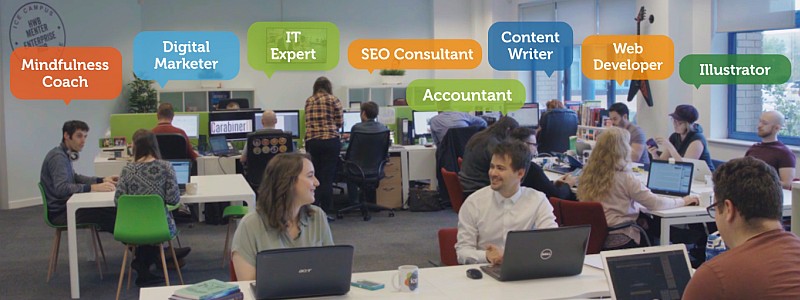
I know coworking isn’t for everyone, and some people are dead against the idea. Do me a favour though: try it out, at least once or twice. You might be surprised how much you like it.
Similar to my BNI groups point earlier in the post, don’t just jump into the first coworking space you find, especially if you have a few local to you. Try out a few, and then consider joining the one that you feel is the ‘best fit’.
If you’re reading this as a small SEO agency owner (rather than as a freelance/solo SEO), one option might be to join a coworking space that also offers office units, and jump into one of their units – that way you get the benefit of being a part of the community, and therefore you can still benefit from those ‘water cooler’ chat moments. You (and your employees) could even consider jumping out of the office every once in a while and sitting in the actual coworking space area for a few hours (assuming you’d be allowed to) – so you can still chat and meet people that way.
11. Visit other coworking spaces
In addition to being based at a coworking space permanently/full-time (Welsh ICE), I also like to occasionally visit other Cardiff- and South Wales-based coworking spaces. I aim for visiting a different one once a month (at least I did pre-lockdown anyway…).
It’s not as effective as being based at one full-time and therefore mingling with people on a regular basis, but it’s good for meeting new people and for catching up with old contacts. Due to my networking habits over the years, whenever I visit one, I usually know at least 1-2 people based at each one. And those people can help to introduce me to new people: “Oh you haven’t met Steve? I’ll introduce you. He does SEO.”
12. Create useful resources for your target market
If you offer SEO in the form of (or as well as) content marketing services, then this can act as a double-whammy. Not only can it help you to get noticed, but it showcases your work in the process…
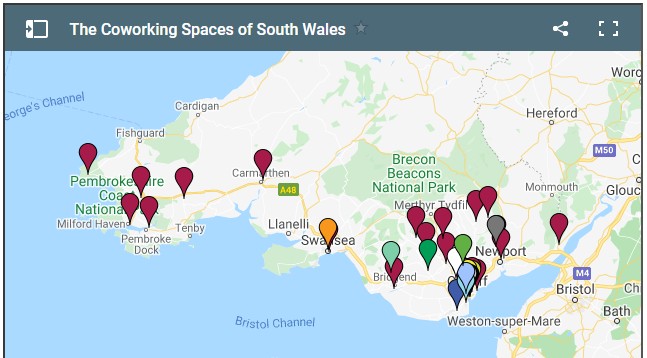
I’ve created a few resources that have proven useful to people in the South Wales area over the years:
- A coworking space map/list covering all the spaces in South Wales,
- TechEvents.Wales – a calendar of upcoming tech/digital meetups in South Wales,
- A list of South Wales-based women speakers who work in tech.
The coworking map/list has done well especially – it often gets shared on local entrepreneurship groups (especially the one that I mentioned earlier) whenever someone asks for coworking space recommendations. The beautiful thing is that oftentimes I don’t even have to share it myself – someone else will do the honours, which showcases me/my name/my work without me doing it in (what might come across as) a pseudo-self-promotional way.
The only downside is that stuff like this needs creating, updating and maintaining – which can take time (and may also cost money). The coworking one is likely out-of-date at the moment – however the event calendar on TechEvents.Wales is mostly self-sufficient, as it auto-updates due to a $50-a-year plugin that routinely checks Meetup.com’s and Eventbrite’s APIs for updates and adds new events as-and-when they’re published on those sites.
Oh and they can be great as link building assets, too (#cheekySEOtiein).
13. Offer free-to-attend advice workshops
Offering stuff for free is a delicate subject in the freelance world – but it is a consideration. Plus it depends on how much you give away for free – after all, if you’re meeting someone for the first time, you’re probably going to treat that as a free, no-obligation introductory meeting anyway.
I’ve seen some people go as far as to offer ‘advice workshops’ where they’ll base themselves in a coworking space / office / somewhere else and simply give advice to anyone who asks for it – perhaps limited to a free 30-minute initial chat or something like that. They may not become a client (yet!) but they may refer you to others – plus people love a good bit of altruism.
It’s a good consideration if you’re starting out and/or you haven’t got much work on and you’re looking to fill your sales funnel.
Looking forward to marketing tune ups with @Welsh_ICE members – sweets & colourful pens at the ready #tuneuptuesday pic.twitter.com/QrFXGWDbzx
— Station Rd. (@stationrdmktg) January 27, 2015
14. Write a book!
Haha, seriously! I’ve done it myself.
A lot of people use a book or eBook as a lead generator type thing – so they’re not fussed about making a profit from it in and of itself (through book sales alone), but as a way for prospective clients to get to find out about them and know them, leading to work.
A really smart example of this that I saw recently was Reading-based SEO agency Blue Array’s book: Mastering In-house SEO. In it, they asked 26 in-house SEO experts for their contributions. Those 26 in-house SEOs could all be prospective clients now (if they weren’t already), plus anyone else who reads the book could be a prospective client. If/when they think about SEO, they’ll probably remember Blue Array. Absolutely genius. *chef’s kiss*
This ties in with point #7 above. What’s stopping you from doing something similar? What about a webinar interviewing in-house SEOs? Or a podcast? Or something else?
15. Ask your clients to refer you
And lastly, don’t forget that you can always consider asking your past and current clients!* You’ve done good work for them, they love you, they want to help you out and see you succeed as well – so be sure to ask them if they know anyone who needs an SEO helping hand, too.
* Assuming the relationship is good, obvs!
Pick n’ choose your poisons
A really important point: I’m not expecting you to do all 15 points above (that would be wild)! It’s important to pick-and-choose the ones that are right for you. Not a fan of Facebook? Don’t do #8 then. Not keen on the idea of coworking? Don’t worry about it. Pick and choose the ones that sit best with you.
I think it’s important to give stuff a go and to try out a few of them (after all, you don’t want to do just one thing and it doesn’t work out), but you don’t have to necessarily do most or all of them. Although hats off to you if you do, haha…!
Important – Adjustments for COVID-19
Ok, so as I publish this (July 2020), we’re still in lockdown as a result of the coronavirus/COVID-19. Here’s my adjustments to some of the above, where applicable:
- Focus on online tactics – Obviously offline/face-to-face networking is essentially ‘dead’ for the time being, so focus on the online activities instead: webinars, Twitter chats, Facebook groups, etc. A lot of ‘offline’ meetups have moved their events online in the meantime – Bristol SEO Meet is one of them. The added bonus here is that you can potentially network with people you wouldn’t normally do otherwise (e.g. if you don’t live near Bristol and therefore wouldn’t be able to go to one of their offline events).
- Seek safe & socially distant options – When things do start to return to normal (or as normal as they can be), make sure you try to only network in ways that are safe and socially distant, whether that’s at an event, at a coworking space, or elsewhere. This applies to you more-so if you’re running your own offline events: it’s up to you as the organiser to make sure that everything follows official social distancing rules, in order to keep everyone safe and happy.
Learn more in Anti-Sell: the book!
 If this post was useful then you may be interested in my book: Anti-Sell. It covers some of the above points in more detail as well as other tips and tactics, including:
- Further tips if you’re already in full-time employment (and wanting to go freelance), or if you consider yourself to be shy/introverted, or extremely sensitive, or identify as having a disability or chronic illness.
- How ‘going niche’ can make getting referred easier, and can also be a good way to get the right types of clients.
- The best way (IMO) to go about obtaining testimonials from clients.
- Why you should consider entering yourself into awards.
- How to utilise your Anti-Sell skills when growing your freelance business into an agency (should you wish to).
Find out more (with links to buy it) here!
And there we have it! 15 ways to get SEO clients. Whew! What a wild ride, huh? But what’s worked for you…? Let me know in the Disqus comments below, or alternatively feel free to drop a question if you have one. Happy Anti-Selling!
[Image credits – All images my own except for the Welsh ICE one, which is a still from a video that was made in conjunction with Insight Video Marketing (you can see the full original video here)]