It’s time for another Anti-Sell Story, where I interview freelancers and ask them how they get work and clients. There were originally eight in the book, and since then I’ve done a few more on this blog.
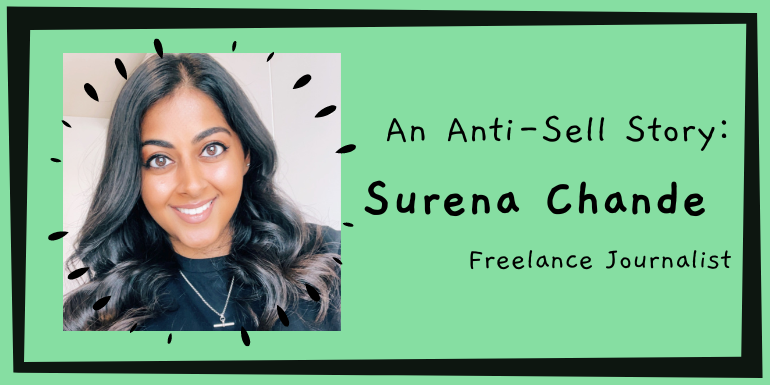
This time we have Surena Chande, a freelance journalist (who’s also worked on the ‘other side,’ in PR). Surena and I met at brightonSEO a few years ago, and since then we’ve mostly kept in touch on Twitter. I invited her to speak at one of my Cardiff SEO Meet events (Meet 12 in May 2019), which (I think?) was her first ever public speaking gig (spoiler alert: she rocked it).
A few highlights from Surena’s Anti-Sell Story:
- Surena talks about her experiences transitioning from freelance to full-time work (and back again). While a full-time role can offer camaraderie with the team that you work with, freelancing offers a level of independence and freedom that no non-freelance/full-time role can truly offer.
- Don’t be afraid to tweet that you’re looking for work! Out of frustration, Surena once put out a tweet saying that her freelance work had run dry, which was seen by someone she had previously done some freelance work for, who then offered her a dream opportunity.
- Community. Not just on Twitter, but by joining dedicated groups – in Surena’s case: ContentUK. It’s not only led to some freelance gigs, but it’s a place to learn and receive support on all things freelancing and content writing.
Steve Morgan: Hi Surena! First off: please introduce yourself! Who are you and what do you do?
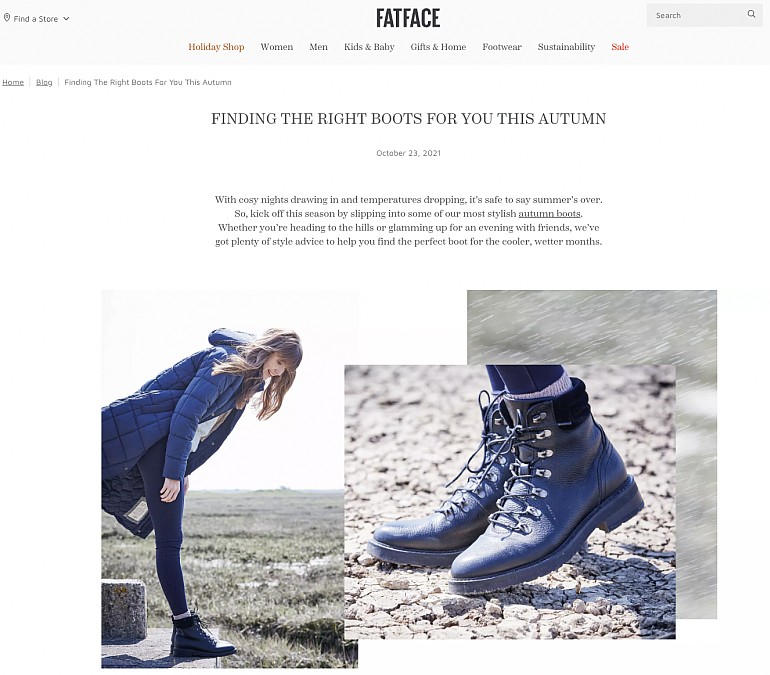
Surena Chande: Hey Steve! I’m Surena Chande, a freelance journalist and copywriter with over 10 years of experience. I’ve worked on titles including the Mirror, Daily Star and OK!, and have freelanced for publications such as Metro.co.uk and Harper’s Bazaar. When it comes to copywriting and content strategy, I’ve worked with brands including FatFace, Clarks, GoCompare, South Western Railway and Expedia.
Steve: How did you get into journalism?
Surena: I decided to pursue a career in journalism after a mere two weeks of work experience on a magazine in Dubai – Ahlan! – at the age of… 14. That’s honestly all it took for me to decide I wanted a future in the industry – in hindsight, exploring other career options may have been wise. Thankfully, I still adore writing and have struggled to find another career path I love as much!
So, following my work experience and a letter from the Editor, who said I’d make a “brilliant journalist one day” and was probably just being nice, I moulded my A-Level choices around it by doing English and Media Studies. I then applied to do an undergraduate degree in Journalism and went to Kingston University, where I learnt about print journalism, ethics, law for journalists, and so much more.
However, nothing prepared me for the slightly soul-crushing job hunt after graduating. I was desperate to land a role in the UK, but after several months of job hunting, paired with working in retail, I decided to head back to Dubai – where my family were still living – and try my luck there. A few terrifying phone calls later and I’d managed to secure – unpaid – internships at Cosmopolitan Middle East and (what was then) the leading women’s lifestyle publication out there, Ahlan! Magazine.
It was during my time interning at Cosmo that the Deputy Editor put me forward for a Junior Writer role on another magazine. From there I progressed and eventually moved to other magazines including becoming the Assistant Editor of BBC Good Food Middle East and Ahlan! Magazine. Eventually, I decided to move back to the UK, and within weeks I’d secured a role as Showbiz Reporter for OK! Online – and that’s how I broke into journalism in the UK.
Steve: In addition to journalism, you’ve also worked in PR in the past… Have you found that working on ‘both sides’ has helped you when it comes to the journalism side of things?
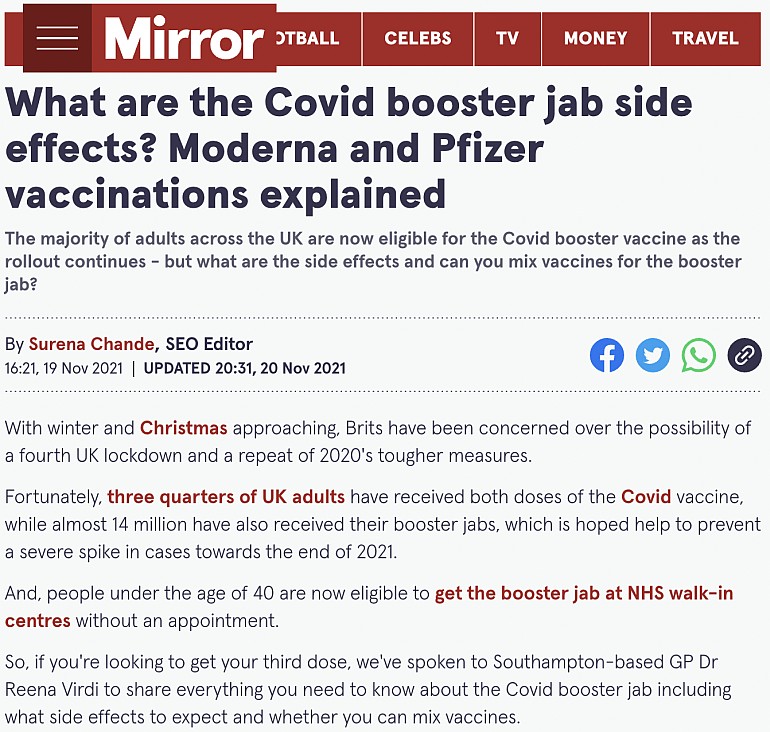
Surena: Working on both sides of the pitching desk has been a fascinating experience for me and I think it really helped me with my creativity. With campaigns in Digital PR, we’d constantly be thinking of campaign ideas that were newsworthy, as well as trying to draw multiple angles from one campaign. That’s directly transferable to journalism, and really helped me to adapt to being an SEO Editor when I was at Mirror and Daily Star. Not only was I looking to explain the main angle of a story to readers in an easily digestible way, but I also wanted to ensure we were always covering all bases and angles that may not be as obvious.
It also helped me with my confidence, in all honesty. Journalism can be brutal and high-pressured, and I’d worked with some cut-throat Editors who massively knocked my confidence. So, when I went to work at Verve Search, after taking a break from the world of journalism, the patience and kindness my managers and colleagues showed allowed me to rebuild myself and my confidence again.
Steve: In addition to freelancing as a journalist, am I right in thinking that you also took on a full-time journalism role recently (in addition to your earlier roles)? How did you find transitioning from freelance journalism to a full-time role (and then back again)?
Surena: I’d said to myself that it would take the dream role being offered to me for me to consider leaving the world of freelance. And, after just over a year of freelancing, I was offered a job as SEO Editor at the Mirror and Daily Star. Despite putting my heart into it, I quickly realised the role may not be suited to me and I could earn more with less stress by being freelance or exploring other roles.
As I mentioned previously, journalism can be highly stressful. I’ve also reflected on the role since, realising I put far too much pressure on myself to meet expectations that no one expected of me. However, as with any full time role, there are also day-to-day frustrations that come into play and I realised that all of the factors combined just weren’t working for me when I was perfectly content being freelance.
Transitioning from freelancing to full-time was a definite shock, with daily meetings and news conferences, helping to manage a team of writers, reporting on our team’s progress etc. while freelancing either involved writing (articles for brands and publications), content strategy or other singular elements.
One of the main things I loved and realised I’d missed while freelancing was being in a team again and having colleagues that I could learn from, speak to and work with. They made some of the harder days far more bearable and we were always there for each other if we needed a vent or were feeling wobbly. While there have been many supportive people I’ve encountered during my time as a freelancer, it was nice being able to just message my colleague and vent if I needed to during the day or go for a drink with them after work!
However, I did miss the independence and freedom of freelance life – being able to take a break when your brain just isn’t playing ball, starting a bit later if you had a terrible night’s sleep, being your own boss and not having to confer with multiple people when you feel strongly about a method potentially working better, and working to hours that may suit you more.
I’m already loving being freelance again and have lots of exciting additional projects lined up for the rest of this year in the form of talks and workshops, where I’ll be sharing advice and tips on things I’m truly passionate about. And, while my first year of freelancing went particularly well from November 2020 to November 2021, I took on a fair few projects that I realised I wasn’t passionate about. While freelance life is a huge learning curve, as I’m sure you’re well aware, I’d like to think this transition back to it has taught me the importance of aiming to work on things I truly enjoy and care about.
I’ve also spoken to plenty of freelancers from a range of fields and realised I’ve charged too little in the past, so I’m hoping to now ensure that I change that going forward rather than panicking about the potential scarcity of work and just saying yes to low-paid projects.
Steve: You’ve sort of answered this already, but dare I ask anyway… 😈 Which do you prefer: freelancing or full-time employment?
Surena: Ha! I feel like I’ve answered this in a wishy-washy way above, in a way. However, for now, I’d have to say I’m loving freelance life and I don’t see myself leaving it any time soon. I’m working on things I thoroughly enjoy, with clients who have faith in me and trust me to do a decent job of things, while being able to work in a way that suits me and I don’t have too much pressure other than to meet deadlines and to do my work well.
There’s lots to love about full-time employment, in the form of security, paid leave, the team element, etc. – but right now, I think freelancing suits me perfectly and I’m excited about where it could go.
“Putting yourself out there on social media can play a huge part in getting freelance work in my opinion, and it’s how I got 90% of my clients since taking the leap and going freelance.”
Steve: How do you get freelance journalism work these days? I imagine that networking, word of mouth and making contacts all play a big part…?
Surena: Networking plays a huge part – and if I’d had the connections I have now, I reckon I’d have been able to make a career in journalism work after graduating. Unfortunately, I don’t think Twitter was being utilised by journalists in quite the same way back then and I do think there was a fair bit of gatekeeping.
Now, I’ll see multiple pitch call-outs, announcements of shift availability, and people I’ve never met but know on Twitter tagging me in those tweets or sending them to me. In fact, I got the SEO Editor role thanks to a tweet I’d posted, ha!
I’d tweeted about how I was feeling a bit rubbish about myself as my freelance work had run dry (for the first time in eight months, so it was ridiculous in hindsight) and asked for advice on how to avoid tying my self-worth to freelance work. From that tweet, a lovely woman I’ve still never met messaged me the names and email addresses of Editors she was working with who may have shifts available. One of these was a former Editor at Reach PLC regional titles, who I freelanced for before she put me forward for the job.
I’m always trying to do the same for other freelance copywriters, journalists and digital PRs, by tagging them in any opportunities I think they may be a fit for.
Additionally, I’ve got work from journalists I’m friends with or acquaintances with, who have either reached out to me out of the blue, or have seen me sharing articles I’ve recently written, and asked if I’d be interested in shifts with them, etc.
Putting yourself out there on social media – be it Twitter, LinkedIn or Instagram – can play a huge part in getting freelance work in my opinion, and it’s how I got 90% of my clients since taking the leap and going freelance in November 2020.
Steve: Has there been a particular marketing or networking tactic that’s worked well for you?
Surena: I’ve previously been asked about this and how I ‘built my profile and presence’ on social media, and I always wish I had a better answer, but I’ve genuinely always just tweeted my thoughts/tips/nonsensical views about everything under the sun. This then led to my social media following growing, bizarrely, and that’s led to me often getting enquiries.
There’s never been any strategy or tactics behind it other than just being myself, and I’m always in awe of those who have a tactical/more thought-out approach and regularly tweet threads, tips, etc., but I tend to be more impulsive.
I always try to be kind to people online and in real life, and have always congratulated those who have announced accomplishments/big moments. I also try to help others on social media, whether it’s by answering questions they may have, putting them forward for work, or being a safe space for them to vent if they’re feeling low – whether I’ve met them or not.
On the flip side, I’m very shy in social situations where I don’t know people and am utterly hopeless at going up to people and starting a conversation, which makes networking at events and conferences terrifying and quite daunting. Once I get to know people/if they approach me, it’s hard to shut me up but I do wish I could be better at networking in person! However, I would recommend attending conferences to anyone as you never know who you could meet.
Finally, I also joined a freelance content community called ContentUK run by the brilliant Christina Pashialis, and that’s led to a few freelance gigs as well as a place for me to learn from others who are far more experienced in the freelance world. If you’re a freelance content writer, I’d highly recommend joining that community as everyone’s super-supportive. However, if you’re in other niches, there are so many brilliant communities out there these days where you can learn from others, find freelance gigs, go for meetups, and even attend webinars.
Steve: What’s the most roundabout way you’ve gotten a really good gig as a freelance journalist?
Surena: I also answered this above, but yes, by tweeting about how rubbish I think I am. I was hoping for freelancers to give tips that worked for them, but when someone was kind enough to share their contacts with me it led to me getting freelance shifts, with Editors I still work with now, and a job!
While it may not be journalism, I got one of my first freelance clients because I went on a webinar and shared tips/my thoughts on Digital PR and outreach, tweeted out the link and the lovely Paul May from BuzzStream said it was “one of the most useful digital PR webinars” he’d seen in a while. Three months later, when I announced I was going freelance, they got in touch and contracted me to write blog posts about the topic for them – something I never would’ve expected.
One of the most useful digital PR webinars I’ve seen in quite a while. Surena’s experience as both a former journalist and a digital PR pro make the pitching tips particularly helpful. https://t.co/4CvFC4xSYJ
— Paul May (@paulmay) September 9, 2020
Steve: What advice would you give to your younger self – the version of you who’d only just gone self-employed?
Surena: I love this question! I’d have told November 2020 me that it was all going to go far better than I ever could’ve imagined – to be fair, that genuinely wouldn’t have been hard as I’d been panicking and doubted I’d get a single client. I’d also tell her to have more faith in herself and to reach out to brands/clients that she dreamt of working for, as they actually wouldn’t laugh in her face but actually sign up for several months.
I also wish I’d been more selective about the projects I took on, as some took far longer than anticipated and I’d massively undercharged.
Oh, and I’d also suggest she started a spreadsheet with invoice amounts, expenses, outgoings, etc. from Day ONE rather than after almost a year!
“SEND. THE. PITCH. Worst comes to worst, you get a ‘no’. In the best-case scenario, you get a ‘yes’ and future commissions. It’s worth the risk!”
Steve: Any final advice to aspiring freelance journalists out there?
Surena: Do it, take the plunge and don’t be afraid to reach out to Editors to see if they need anyone for shifts or commissions. Reach out to fellow journalists – including me – if you’re looking for contacts or advice, we’re often really happy to help others!
I’d also say that despite it being daunting, try to have faith in yourself. It’s taken me years and I see younger journalists writing stories I’ve always wanted to but never had the faith in myself to pitch in fear of it being too ‘boring’ or ‘silly’. SEND. THE. PITCH. Worst comes to worst, you get a ‘no’. In the best-case scenario, you get a ‘yes’ and future commissions. It’s worth the risk!
And, I’d personally suggest being active on social media. Follow people you look up to or who are already doing things you want to be doing, whether it’s writing for your dream publication or about topics you’re passionate about. Interact with them if you find their work inspiring and thought-provoking, and ask them questions! While we all live busy lives, many of us are happy to help aspiring journalists out because we’ve been there, we know how hard it is to break into the industry and I – personally – desperately want that to change.
Surenda Chande is a freelance journalist, copywriter and speaker based in London. Follow Surena on Twitter, Instagram and LinkedIn.