At brightonSEO October 2020 I gave a talk titled Going Solo – The Survival Guide for Freelance SEOs (Present & Future), which gave advice to aspiring, new and longer-term SEO freelancers.
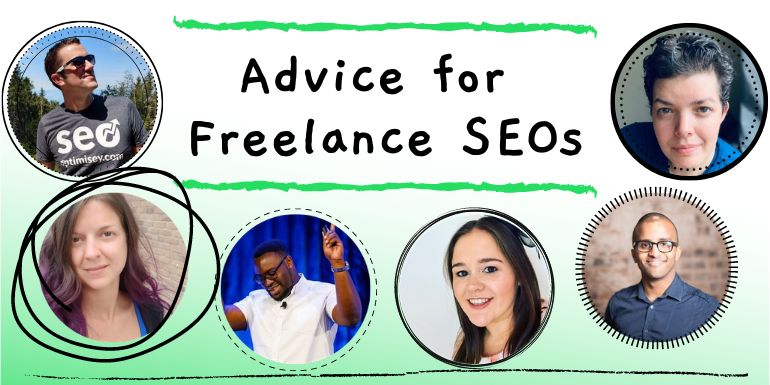
I contacted a bunch of wonderful fellow freelancers for their input and their tips to include within the talk itself, but with a total talk time limit of just 20 minutes, I overestimated how much I could cram in. So instead, I’m including their contributions here instead – sort of as a complementary piece that accompanies and follows on from the talk. I asked each of the following freelancers two questions, and I’ve published their answers below. Enjoy!
Question 1: What’s your top tip for SEO freelancers?
Andrew Cock-Starkey (a.k.a Optimisey)
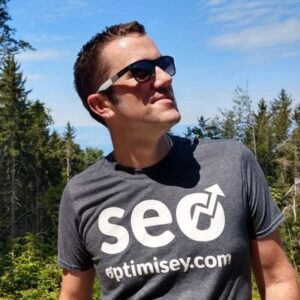
Andrew is a freelance SEO consultant based in Cambridge, who also runs a meetup.
One tip?! Come on… that’s like asking a parent to pick a favourite child!?
OK. My one tip would be: get a safety net.
That’s a good idea anyway but for anyone thinking of launching themselves into the world of freelancing whilst we’re in a pandemic, it’s even more relevant.
The good thing about a ‘wage slave’ job is the wage bit. That money keeps on coming, every month, regular as clockwork. A bit like rent or mortgage payments or mobile phone bills etc. There’s nothing quite like the adrenaline jolt of wondering if you can pay your bills at the end of the month.
So get yourself a safety net. Save up at least 6 months worth of money that will at least keep you and yours housed, clothed and fed.
That financial security makes a world of difference to how you’ll sleep; what you feel you can say “no” to; and a world of other decisions you’ll do better with because you don’t have to.
If the economy tanks; your biggest client slashes their budget; or you miss a few weeks because you’re ill or something else awful happens – having that safety net makes a huge difference.
Natalie Mott

Natalie is a freelance digital marketing consultant covering technical SEO, link building, PPC, content & PR.
GET A GOOD ACCOUNTANT. And spend time on the admin of building your business upfront, because if it takes off in the way you hope it will, you may suddenly find yourself stretched for time. In my case, I don’t have a (proper) website yet, which feels a bit laughable for an SEO specialist.
Luke Carthy

Luke is a freelance ecommerce growth consultant.
Don’t rely on your website for leads – you’re unlikely to get many that way. Most of my work early on (and even now) comes via Twitter and LinkedIn DMs and even WhatsApp. It’s rare many genuine leads come via my website’s contact form. However, it’s still important to get a site together to showcase your work, contact info and musings etc.
Stacey MacNaught

Stacey is a freelancer-turned-small-consultancy-owner (MacNaught Digital) based near Manchester.
Get to grips with your most productive hours and work to them when you can. When you’re working solo, productivity and efficiency is massively important. For me, I work best 7am to about 1pm and then I’m pretty crap from early afternoon. I get another good stint in an evening too.
But wherever I can possibly do so (and it isn’t feasible every day), I work to those hours.
I find the same task can take me twice as long in my least productive hours, so I think becoming familiar with when you work best is absolutely critical.
Ahmed Khalifa

Ahmed is a freelance WordPress SEO based in Edinburgh.
Value the importance of genuine and natural relationships.
It’s very easy to assume that you have to do everything by yourself when you start out as a freelancer. But that is definitely not the case. Even if you are a one-person team, you are still dependent on other people to some extent. If you need help with design, copywriting, development, accounting, etc., you will need someone to help you with that so that you can focus on SEO. Sure, you can do it all yourself, but just like how you should value your SEO expertise by delivering quality output at a reasonable time, the same could be said about working with other people with their specialities. They can do it better than you and in quicker time too.
From a different perspective, having professional and natural relationships with the right people can also help you to get referred clients. If they know you and trust you, it’s easier to get recommended – and in most situations, people prefer and trust word-of-mouth more than just by visiting your website.
Notice I use the word “natural” in the “natural relationship”. Relationships are not something that you can force or fake. The cheesy act of flashing out business cards to as many people as possible for no reason is dated and should not be encouraged. If you value the quality of your relationship, you are willing to put in the time and effort to build it without expecting anything in return. Even if it means that you give more than you take, you are more likely to gain the trust of others. Even if you don’t receive monetary returns from building that relationship… well, enjoy their company anyway.
Yes, this whole concept will take time. But if you value people, you are willing to invest your time into building genuine relationships. So join in the conversations on social media, attend local communities and meetups, take part in conference events, mingle with the crowd… but do it all without thinking about “what will I get in return for my freelancing business?”.
A relationship is a two-way street.
Sarah Tamsin

Sarah is a freelance digital consultant based in South Wales.
When working for clients, set aside time to develop separate income streams using your SEO skills. For example: affiliate marketing, blogging, designing product landing pages and writing product reviews. So when you have quiet times without many clients, you won’t have to worry about money as much if you have multiple income streams.
Question 2: What do you wish you knew when you first started out as an SEO freelancer?
Andrew Cock-Starkey (a.k.a Optimisey)
That there is no ‘right’ way to do this. You need to forge your own path.
Yes, reading stuff like this from folks that have “made it” is great but it’s survivor bias. By definition the only people contributing to this are currently freelancers who, presumably, are doing OK as they’re still doing it.
If I’d fallen on my face, made a monumental horlicks of it and gone back to a ‘proper job’ Steve wouldn’t have asked me to contribute.
So sure, take advice like this, read helpful ideas on how to find new leads or suggestions about when and whether to go LTD or when to get an accountant etc. etc. but remember there is no manual. Yes, there are things you have to do like a tax return (death and taxes, amiright?) but the rest of it is all advice. And you don’t have to take it or at the very least you can certainly be a lot more selective about it.
No one has the same skillset as you or the same contacts or lives in the same area or has the same family commitments. You’re unique. Find your route to happiness and your definition of success.
That last bit is crucial. I watched a recent episode of Dragons’ Den and, as one of the Dragons built up to their “I’m out” speech, they said: “This is going to be a great little business for you but not a success.” What they meant was not a business that’ll make millions for them, as an investor, to have a successful investment.
For me and for many freelancers, having a ‘great little business’ that pays the bills is success. But that’s me and my circumstances. One of the most wonderful things about freelancing is, you get to set your own definition of success.
Natalie Mott
Well firstly I wish I had noticed that I was actually equipped to do this 4 or 5 years ago. My advice to anyone considering this, if they are a self-starter and have an appropriate level of experience – these things are key, otherwise I expect the risk of failure is greater – is basically there’s no time like the present. If it’s what you want to do, and you know how to do it, just go for it. The greatest benefit to self-employment that I’ve found is that you don’t have to work with arseholes difficult people if you don’t want to – I wish I’d known that earlier too. Lastly, and I don’t like admitting that I’ve learned this from personal experience, but give some serious thought to your day rate. It is unwise to just take what your salaried day rate was and put a bit more on top. Yes, you’ll probably fill your diary immediately but that is because you will be selling yourself short.
Luke Carthy
If you’re going into it full-time, speak to a financial advisor and mortgage advisor to ensure you’re setting up the best way possible when you’re ready to buy your first home or renew your mortgage. It’s critical to ensure your personal and business financials work best for you from the get-go!
Stacey MacNaught
I’d had the benefit of 10 years working agency-side, so I felt reasonably confident with my ability not only to deliver the SEO but also to handle the new business and account management side of things.
But what I wasn’t ready for is how much I would not enjoy working at home. When I was agency-side I often worked at home when I needed to get something done quickly and quietly and it was fine. But when it became my primary place of work, I really struggled.
That came as a surprise to me.
I started working out of coffee shops on occasion and I tried coworking spaces too. Turns out I would work better anywhere but home. Eventually I took office space. But that definitely came as a shock to me.
So I wish I’d known that I wasn’t as crazy about permanent homeworking as I thought I would be.
I’ve built my life now in such a way that I can work from anywhere. Sometimes, I need a change of scenery and as much as I don’t like being at home everyday (thanks Coronavirus), I equally don’t like being in an office every day. So I work flexibly from home sometimes, office sometimes and then other places too when we’re travelling with family etc.
Ah travel. Remember that?
Ahmed Khalifa
Show your face consistently.
It is very easy to stay comfortable and hidden behind-the-scenes without showing your face anywhere. It’s easy to share your thoughts behind an avatar and not worry too much about people recognising you. And with the help of technology, it is incredibly easy to not have to go out too much or attend local events. You can just do it from the comfort of your home, again behind an avatar.
But there is something powerful about showing your face, both online and offline. It can help to build trust, create a connection and start conversations. People are more likely to warm to you when you are transparent than when you hiding. Staying hidden has a bit of a dark underlord feel about it. It is difficult for people to get to know and for you to show your expertise to your peers and clients if you are not really visible.
This also somewhat defeats the concept of being an SEO freelancer. Your clients will want to work with you, not your brand or your online persona. So isn’t it better for them to get to know you by being visible and upfront?
I’m not saying you need to collect thousands of social media followers, have a popular YouTube channel and be on every single conference stage across the audience. I’m not saying you have to create something every single day and expect to be everywhere at once (we’ve all got work to do). But even showing your face on social media and websites can go a long way into allowing people to get to know you better as an SEO freelancer better.
You can also go one step further by also creating audio content (yes, we know that you don’t like your voice, but trust me – everyone will say the same thing about their own voice) and even consider having videos of yourself on your website or YouTube. Show your expertise, open up about your experiences, prove to potential clients that they can trust you, help others by sharing your knowledge and allow them to build that connection with you and get to know you.
That way, you will become more recognisable when someone happens to run into you.
Sarah Tamsin
What I wish I knew – If you’re going from a full-time job to freelancing, it may seem like you have more freedom but when you’re fully-booked with client work, the reality is that you have multiple bosses to report to, instead of just one. So in some ways, you could end up with less freedom than you did when you had a full-time job with only one manager.
Also, you’re not on your own when it comes to problem-solving and you can’t be expected to know the answer to everything. The SEO community on social media is extremely helpful and there’s lots of SEO knowledge in other communities such as copywriters, bloggers, online influencers and web developers. If you’re active in these communities (Facebook groups) etc, it’s a great way to build your professional network and learn about different marketing concepts you can apply to your own work.
Summary(?)
Soo originally I planned to write a summary of everyone’s contributions, assuming that there’d be some overlap and recurring points.
But you know what? Everyone’s answers were pretty much unique! From talking about finances and accountants to confidence and self-promotion, I don’t think there was much overlap whatsoever. But this is great for two reasons. Firstly, you get more info out of each of the successful freelancers listed above (because it would’ve sucked if everyone made the same point each time, right?). And secondly, it just goes to show the uniqueness between freelancers (to touch upon one of Andrew’s points) – even when they all work in the same industry (SEO). Everyone’s experiences and journey is a little bit different. And that’s exciting.
A big thank you once again to Ahmed, Andrew, Luke, Natalie, Sarah and Stacey for contributing!
Thanks for reading! If you’re looking for more help in getting started with freelancing – and especially on the sales and networking side of things – then check out my book: Anti-Sell. It also contains the stories of eight other freelancers, one of whom is Ahmed (featured above)!