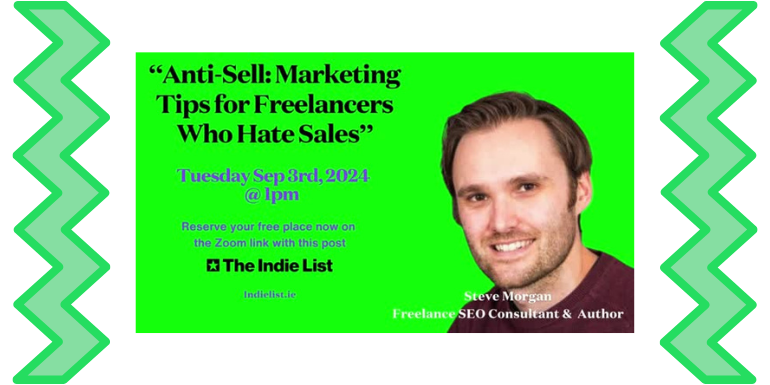

I’m really excited that the Anti-Sell blog’s first guest post* comes from Bryn Bonino! After reading Anti-Sell, Bryn contacted me to recommend some awesome marketing/sales books by women (because in the book, I ask people to recommend some to me). Bryn’s post below complements Anti-Sell perfectly – it’s like she’s written an additional chapter for it! If you’re using Anti-Sell strategies but you’re struggling to apply them to your target audience (such as your ideal client) then this is the ideal post for you…
* Want to write for Anti-Sell? Read the guest post rules/guidelines here!
Nearly every night for the past two years, I’ve made a date with myself to read a book for an hour. Amazon had recommended Steve Morgan’s book Anti-Sell to me several times, so I decided to dig in.
As I read what Steve recommends, I felt like he was talking to me. And at some points, I felt like he could actually be me. This is because I’ve tried a few of the strategies that he introduces in Chapter 4. But I’ll admit that I haven’t achieved so much success with these strategies that I could write my own book.
The Shift I Made
In the month since I finished reading Anti-Sell, I’ve had several conversations with colleagues in my mastermind groups, with my own clients, and with Steve himself. What then came clear to me was that I had approached all of my Anti-Sell conversations as a knowledgeable person ready to help whomever wanted to listen to me. But in doing this, I didn’t have any more clients than when I’d first started the Anti-Sell strategies.
What I needed to do instead, is be extremely clear on who I wanted to talk to. This way I could constantly be on the lookout for this type of person. Then when I met him or her, I would already know what I would say to them in certain situations. This way, my message would resonate much more strongly, and I’d be much more likely to get a sale out of the conversation.
Identifying Your Customer Avatar
As you read this, you may be thinking that you don’t like putting people into a box. I know. Me neither. This is why I like to lead with feelings, this is what we all have in common.
Identify What They’re Feeling. Think about this, you wouldn’t be in business if you weren’t helping people meet some kind of transformation. And people wouldn’t hire you if they weren’t feeling uncomfortable in some way. This is why I first recommend that you identify what your ideal client might be feeling before they hire you.
Find Their Problem. The next step in identifying your customer avatar is thinking about what problem you can help them solve. You can help your clients feel better by actually doing something for them. To articulate this, think of what your purpose is, and relate that to the results that you can get for someone.
Transformation You Make. After this, think of the transformation that you can get for someone. Here, get very clear on the positive feelings your ideal clients will feel after they work with you. Also, envision exactly the results that you can get for them.
Fabricate A Real Client. The next step is to craft (make up) a real person who you can help. Give them a name, a personality, figure out where they hang out and what they like to do. Then make a vision board of all of the aspects of your ideal client. You may think you can skip out on this last step, but remember that 55 percent of communication is visual. So, you will help yourself if you create a tool that will allow you to envision your ideal client.
Differentiate Your Entry. Finally, figure out what you’ll say to this person when they are in various stages of the customer journey. Think of these three situations: (1) They feel uncomfortable about something, but don’t know why. (2) They’ve identified their problem, but they don’t know any possible solutions. (3) They know possible solutions to their problem, but they don’t know exactly who should help them out.
When you can map out all of this: feelings, problems, transformation, a vision board, and pitches you’ll give along the customer journey, then you’ll be much more likely to identify your ideal client and be able to actually solve their problems after they hire you.
What This Actually Looks Like
You may be thinking that it’s easy to talk about all this but it’s much harder to do. I know it is, because I’ve done all of this myself. I also now help others through this process. So in the next few paragraphs, I’ll take you through what this looks like for my own business.
Feelings. I realized early on in my Anti-Sell process that I cannot happily work with just any kind of person. Like Steve talks about in his book, I too am highly sensitive, so I’m happiest when I’m judicious about who I work with. I find that I am happiest when I work with people who feel what I feel.
In order to identify my most common negative and positive feelings, I walked myself through a process that I describe in my Storytelling Branding Jumpstart masterclass. I took a look at my own backstory and was able to tease out the feelings of frustration and excitement to be what I most commonly felt.
Problem. When I first started with the Anti-Sell process, I was pitching myself as specializing in designing lead-generating websites. This put me in categories with others who seemed much more comfortable with selling than I am. So, I took a look at who I really am, again by going into my backstory. This allowed me to come out the otherside of the process with new positioning that helps micro-business founders authentically connect with their audience by using storytelling as a tool.
In all honesty, I still design websites, lead magnets, and marketing funnels. But the way I communicate this is to attract the people who I want to work with. I specialize in authentically connecting and using storytelling as a tool. This is so I can drive away anyone who wants to indiscriminately collect a lot of leads for their email marketing.
Transformation. Because I like helping people who experience the world similar to how I do, I talk about a result that I can get behind. I use my own common positive feelings and my own goals when I communicate with my own clients. I say that after working with me, you’ll feel so excited that you’ll be able to authentically connect with your audience using your website and email marketing.
I also make this transformation the centerpiece of my blog and email marketing. I do this using images, stories from my own past, examples from my client work, and with advice from my own experience.
Visualize. I have to admit that when I started visualizing my own process, everything seemed so much easier. I was able to actually see what the people looked like before I met them. I first started doing this by crafting a board on Pinterest with images of people and places that represented people I’d like to work with.

I intermittently look at this board before I meet with anyone when I’m representing my business. This helps put me in the right frame of mind for being Bryn Bonino, branding strategist. And not default into Bryn, the person who’s deeply interested in other people’s stories.
Differentiated Pitches. Now that you’ve identified who you’re talking to and can visualize them, you’re almost ready to talk to your ideal client with your Anti-Sell strategies. The last step is to plan out what you can say to people depending on their situations. People may not tell you how they’re feeling if you don’t know them that well. But you can probably identify what stage of the customer journey they’re in by the questions they ask you.
After I say I’m a branding strategist, the first question some people ask me is if I know Photoshop. This is my sign to educate them that “a brand is not a logo”. Then I can talk to them about common mistakes that people make when branding their business. If they tell me they are interested in working with a branding strategist, I tell them my take on leveraging storytelling as a tool. And if they’re interested in knowing specific outcomes of working with me, I can show them examples of past work that I’ve done.
All of this is to say that when you know who you’re talking to, then you can plan your Anti-Sell strategies much more efficiently than I did when I first started networking. As for my case, I’m happy that I can now update my older blog posts. I’m also now ready with a vision board and a plan to more easily identify possible clients using the Anti-Sell strategies. And with this strategy, I hope you can clearly identify your own customer avatar too.